Maplin / Nikkai A13JG DVD Player with Integrated Freeview

I was in the market for a combined DVD and Freeview unit with HD upscaling and HDMI output and the A13JG from Maplin seemed to fit the bill. At time of writing it is on sale at Maplin for just shy of £50.

A13JG

First impression on unboxing: It is cheap and nasty tat.

Second impression: My first impression was correct.

Despite my having an excellent roof mounted antenna which a Humax Freeview box shows as having 70% signal strength and 100% signal quality, the A13JG failed to maintain a consistent Freeview picture. When it did occasionally manage to display a picture the audio and video were out of sync (even worse when using 60 Hz mode).

The remote control looks and feels cheap (which it is I guess), the controls are complicated and the EPG is totally incomprehensible. I didn’t even get as far as testing out the DVD functions as there was no way I was going to keep it.

Perhaps I should have read the reviews first…

David (26/11/2009)

Unusable for freeview. After about 20-25 minutes the picture freezes. Sometimes more often – only seconds after changing channel up/down or power-cycle.

I returned to Maplin the very next day and was fortunately able to persuade them to refund me, although for all they knew I was returning a brick as they didn’t even open the box to check.

In summary, don’t even think about it.
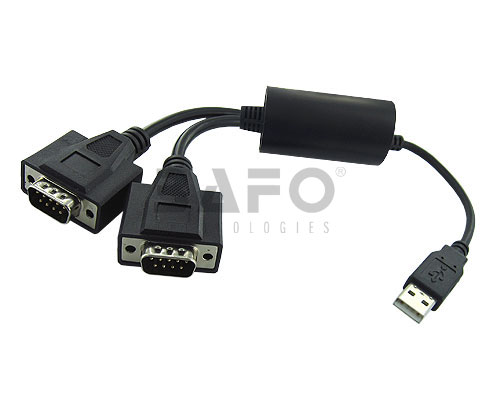
Maplin USB to Twin Serial Port Adapter N04GF

Confirmation that the Maplin USB to Serial (DB-9) two port adapter (Order Code N04GF) is detected by Fedora 12 and works perfectly. The packaging also has the product code BF-816 which reveals that the adapter is actually a BAFO Technologies product, which uses the MosChip MCS7720 controller (driver downloads here).

BAFO BF-816

Kernel output below:

usb 5-2: new full speed USB device using ohci_hcd and address 3
usb 5-2: New USB device found, idVendor=9710, idProduct=7720
usb 5-2: New USB device strings: Mfr=0, Product=0, SerialNumber=0
usb 5-2: configuration #1 chosen from 1 choice
USB Serial support registered for Moschip 2 port adapter
mos7720: 1.0.0.4F:Moschip USB Serial Driver
moschip7720 5-2:1.0: Moschip 2 port adapter converter detected
usb 5-2: Moschip 2 port adapter converter now attached to ttyUSB0
usb 5-2: Moschip 2 port adapter converter now attached to ttyUSB1
usbcore: registered new interface driver moschip7720

Currently on sale at Maplin for £15 (until 26/01/2010)

Upgrading Fedora 10 to Fedora 12 (F10 to F12)

Yes, it is possible to upgrade straight from Fedora 10 to Fedora 12, thereby skipping the dreaded Fedora 11. It wasn’t exactly plain sailing, so here are the steps I went through.

First of all I had to free up all available space on my /boot partition. I cleaned out all old kernels and followed the instructions in ‘not enough space in /boot’ but the Fedora 12 installer apparently requires 26MB of free space in /boot and I had still not freed up quite enough.

I found some extra space by using the following command:

# tune2fs -r 0 /dev/md1

This set the number of reserved filesystem blocks on my /boot partition to zero and gave me around 30MB to play with.

Next for the upgrade itself and for this I used preupgrade (‘yum install preupgrade‘ if you don’t already have preupgrade installed).

# preupgrade-cli "Fedora 12 (Constantine)"

After the F12 packages had been downloaded the system was ready for a reboot.

The upgrade process itself went without any problems, however attempting to boot with Fedora 12 failed with: “Kernel panic – not syncing: VFS: Unable to mount root fs on unknown-block(0,0)”

I tried various suggested fixes for this but in the end had to build a new initramfs image. To do this I booted into Rescue mode using the Fedora 12 DVD and then after dropping to a shell:

# chroot /mnt/sysimage
# dracut -f /boot/initramfs-$(uname -r).img $(uname -r)

One more reboot and I was finally up and running with Fedora 12.

Prevent SSH session timeout

When using mobile broadband I found that a SSH shell session to a remote server would terminate unless I used it every few minutes. To overcome this use the ServerAliveInterval option to send a regular keepalive message to the remote server, which should be enough for the ISP firewalls to maintain the TCP session indefinitely.

Either add the SSH option via the command line, e.g.

$ ssh -o ServerAliveInterval=60 user@host

Or add the following line to ~/.ssh/config:

ServerAliveInterval 60  # Send a keepalive every 60 seconds