The Proprietary Internet

When I started my career working at a fledgling ISP I fondly remember the great excitement of seeing email addresses and URLs first appear on advertising billboards and TV. My hitherto secret world of email, newsgroups and (latterly) web sites was no longer restricted to the techie community and was gaining widespread public adoption.

After a while people didn’t look at me with puzzled expressions when I spoke about my work, and instead they wanted to learn more about this new World Wide Web thing and the odd @ / symbols that were spreading like wildfire in the conventional media.

I felt a sense of pride that we were all working together on a global infrastructure with open standards and unfettered access to content.

That was in 1992 and since then a lot has changed online. I don’t need to go into that.

What I’ve been experiencing in the last couple of years with proprietary and closed social networks is disturbing and quite contrary to the original Internet ethos of sharing and collaboration.

The biggest culprit of what I am complaining about is Facebook.
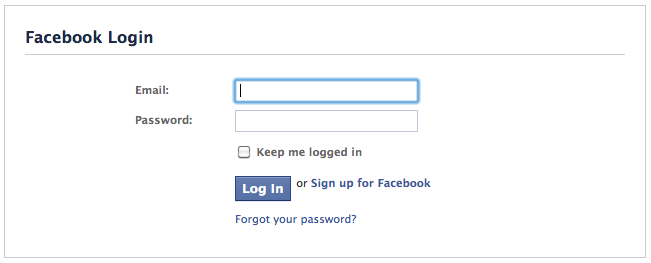
I do not have a Facebook account, nor do I want one. I know who my real friends are, I’m not interested in resuming contact with forgotten acquaintances and I don’t feel the need to collect new ‘friends’ like a virtual Panini sticker album.

Aside from Facebook just not being relevant to me or my daily life, I don’t want to share my personal details with any more organisations that I don’t trust.

So what’s the problem then? I don’t need Facebook and Facebook doesn’t need me.

My problem is that just like I saw email addresses and web URLs go mainstream, I now see facebook.com links instead.

Instead of feeling excited about exploring these products and brands online, I now feel excluded.

Every time I see a facebook.com address instead of a regular company domain name it’s another nail in the coffin of the open and inclusive Internet that I helped to build.

So why this post? It’s a plea to everyone to pull your content from Facebook and embrace the open Internet instead. You’re reading my views right now without registration, so why should I be forced to divulge my personal details and commodify myself just to view yours?

WeWillRipYouOff.com

They have the most banal and irritating advertising campaign ever (which makes goCompare.com look positively award winning!) and now webuyanycar.com has been investigated by the Office of Fair Trading who have taken enforcement action against them over concerns that its online valuations were misleading.

The full investigation can be found on the OFT web site.

We Buy Any Car Limited also has a bit of history with the Advertising Standards Authority …

… and in the national press (this article from The Sun):

CAR sales “specialist” WEBUYANYCAR sacked an employee for paying too much for a motor, the worker has claimed.

He was among dozens of readers who emailed us to complain about the company after it was slammed by regulators last week for ripping off Brits.

The employee, who asked to remain anonymous, claimed colleagues “reset” service warning lights on cars they bought. It meant they could sell them for more at auction.

WeBuyAnyCar yesterday said anyone found doing so would be “dismissed”.

A spokesman added: “We train our buyers to make accurate valuations. Occasionally the buyer proves incapable of the task and we have to let them go.”

How Disappointing.ly Prophetic

I just read an article over at TechCrunch about Letter.ly losing their Libyan domain name.

Didn’t someone around here warn that this might happen? 😛

Microsoft, what’s my MAC address?

Using MAC address filtering to add an extra layer of security to your WiFi network?

Need to know the MAC address of your shiny new Windows Phone 7 device?

You’re out of luck!

There is a rather illuminating discussion on Microsoft Answers – MAC address for WP7 Devices – that sheds light on the issue…

A WP7 customer asks:

I wanted to connect my WP7 device to my home WiFi. However, I will need to know the MAC address of the WP7 before I can connect.

Can anyone let me know where to get it?

Johan van Mierlo (a Microsoft MVP Windows Phone Specialist) replies with:

Yup, they only way is to make sure your wireless network is visible, connect with WEP or other security and afterward make your network invisible again.

Another couple of customers comment:

seems like microsoft just “forgot” to implement that…

I cannot believe this was missed..

My thoughts exactly.

Microsoft, are you for real? You don’t exactly have a great track record when it comes to security and the only way of obtaining the WiFi MAC address of a WP7 device is to disable security?

A leopard never changes its spots!

Tru.ly mad.ly deep.ly

A quick comment on the hoo-ha regarding .ly (Libyan) domain names.

The recent controversy started when the ‘owner’ of the vb.ly domain name found that her adult content link shortening service was terminated without notice, because it was being used for “activities/purpose not permitted under Libyan law”. The other partner in the vb.ly domain name posted an article titled “The .ly domain space to be considered unsafe“. No shit!

What made anyone think a Libyan domain name was going to be “safe”? When you lease a domain name from a foreign registry you are totally beholden to their rules – and whims.

I registered a .me domain name (the allocated top level domain for Montenegro), which is managed by a Montenegrin joint venture. It’s a great name but I do half expect that it could stop working one day and so I don’t use it for mission critical purposes.

The hypocrisy of the Americans is laughable. USA has been an enemy of the Gaddafi regime in Libya ever since he seized power after a coup d’état in 1970. They bombed the capital Tripoli in 1986 and were highly critical of the Scottish government’s decision to release Lockerbie bomber al-Megrahi (a Libyan national).

The United States only restored full diplomatic relations with Libya in 2006, but somehow seem perfectly comfortable with developing web businesses that are totally dependent on Libya’s fragile domain name registry.

How services such as bit.ly and ad.ly have attracted millions of dollars in VC funding when they are built on such potentially unstable foundations is a mystery.

Go figure!