iPhone 5

An industry insider told me that sales of Samsung’s Galaxy S III sky-rocketed the day after Apple’s big reveal of the iPhone 5. Evidently potential customers were holding off their upgrades until they had seen the new product, but what they saw disappointed.

I probably shouldn’t be admitting this, but I have already used the iPhone 5 and I was underwhelmed too. iPhone has become the safe (even boring?) option, something you would confidently give to your Mum and Dad. Apple’s runaway success has become the de facto smartphone, but the commercial imperative not to alienate their mainstream customer base has stifled innovation.

The original popularity of iOS (then iPhone OS) was due to its perfect blend of technology, form and function. Often it wasn’t possible to customise something to your liking, but that was by design and the intention was to keep things deliberately simple.

I look at iOS 6 and wonder where Steve Jobs’ painstaking obsession with simplicity has gone. I never expected CEO Tim Cook to share the same ethos, but since Jobs had apparently described Sir Jonathan Ive as being his “spiritual partner” there was a hope that he would carry forward Jobs’ legacy. It’s likely however that Ive’s control only extends as far as the hardware design, not the operating system, which is the responsibility of Scott Forstall.

Watching the official iPhone 5 promo video, it’s hard not to be impressed by Apple’s manufacturing techniques and the obvious attention that has gone into the hardware design (like crystalline diamond-cut chamfers!), but it doesn’t detract from the hard truth that to the average customer the new iPhone just doesn’t seem all that different.

With each new iPhone Apple usually succeeds in generating enough excitement and desire to persuade existing customers to follow the natural upgrade path, but they also lose some customers to Android – and they rarely return. I don’t know anyone (including myself) who has switched to Android and then gone back to an iPhone. Once you’ve broken away from the closed iPhone ecosystem it feels quite liberating to have the freedom of open services and a wide range of devices.

Conversely with each evolution of the Android platform the gap has been closing and arguably the Android 4.1 ‘Jellybean’ release has leapfrogged iOS by delivering a simple intuitive user interface and powerful features – much like the original iOS.

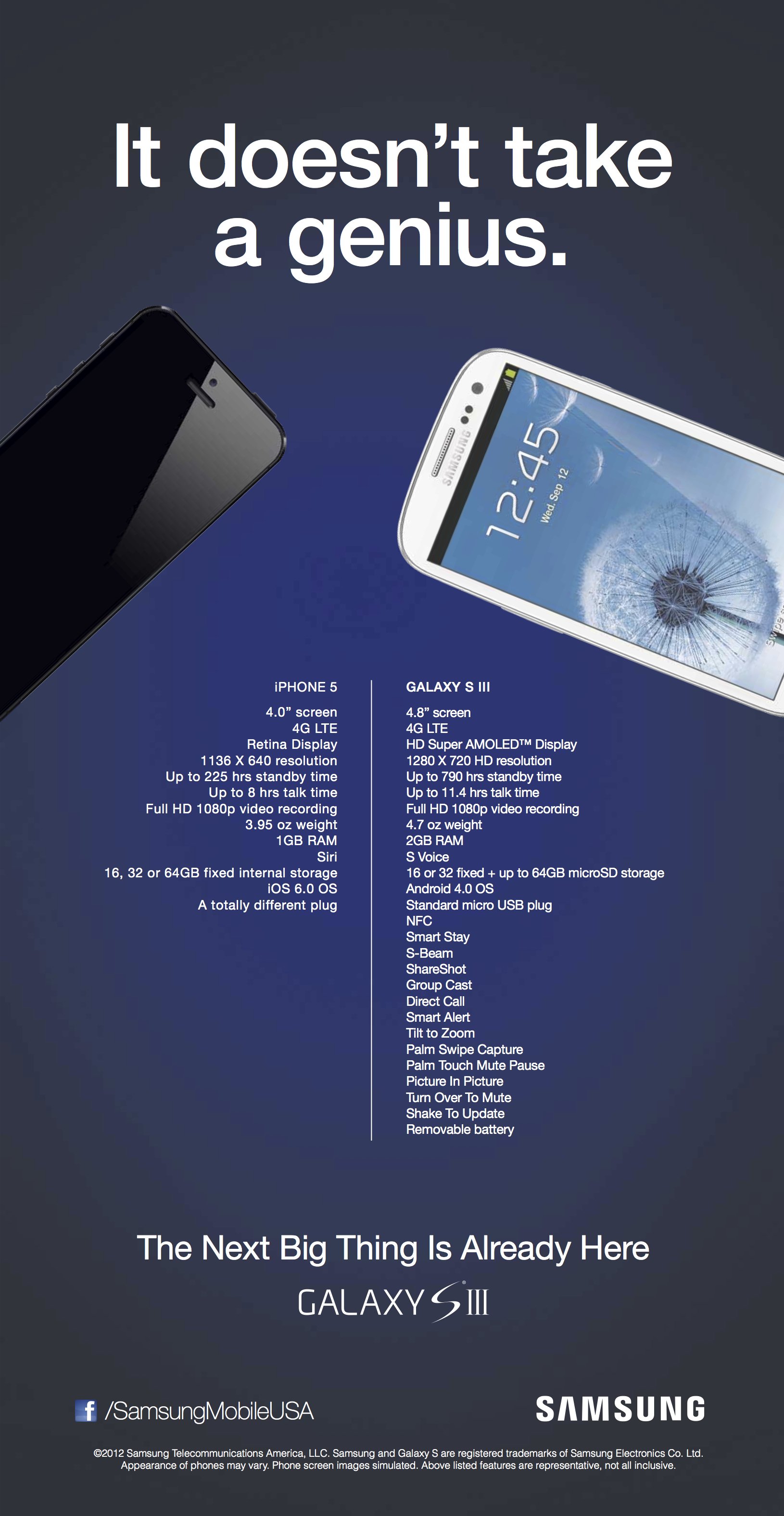
Samsung are seizing the opportunity to capitalise on the apathy surrounding iPhone 5 with a marketing campaign directly comparing their two flagship products:
Apple fanbois have responded with their own parody advert, but when the best they have to brag about is ‘fits all pockets’ and ‘elastic bounce back’ (the subject of Apple’s recent patent dispute with Samsung), it doesn’t bode well.

It’s certainly not all doom and gloom for Apple. They will of course sell iPhone 5 by the millions, but the shine is starting to fade.

I do have an answer to their predicament. Apple needs another product with which to dazzle and showcase their technical excellence and suppressed innovation.

Dear Tim, how about you add a new model to the iPhone range? Call it the ‘iPhone X’, pack it with enough fancy gizmos and new technology to satisfy the Android crowd and demonstrate what the biggest company in the world can really do.

Android 4.0 turns GET into POST

After upgrading to Android 4.0 ‘Ice Cream Sandwich‘ I found that some of my existing apps weren’t working as expected.

On deeper investigation I discovered the culprit. When installed on devices running ICS the apps made HTTP POST requests when they were programmed to be GET requests.

It appears that Google have subtly changed the working of the java.net.HttpURLConnection class – without telling anyone!

The Android package reference documentation has this little gem tucked away in the class overview notes:

HTTP Methods

HttpURLConnection uses the GET method by default. It will use POST if setDoOutput(true) has been called. Other HTTP methods (OPTIONSHEADPUTDELETE and TRACE) can be used with setRequestMethod(String).

My now non-functional Android apps did indeed call setDoOutput, but in Android releases prior to 4.0 this did not result in the HTTP method being changed from a GET to a POST.

Even explicitly setting setRequestMethod("GET") does not fix the problem. Basically if you don’t want your app to POST, you must not call setDoOutput.

The apps have not changed, there is nothing referencing this change in the API Differences Report, but the behaviour is definitely different in Android 4.0.

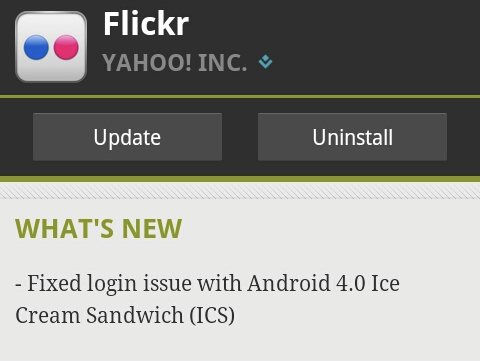
Could this be what’s behind the flurry of Android Market app updates for ICS-related fixes?

BT fix Openzone roaming

In July 2008 O2 announced a deal with BT to provide access to over 3,000 BT Openzone premier WiFi hotspots for all their iPhone customers.

There was however a technical spanner in the works, which has prevailed in ruining this bonus ever since. The name of this ‘spanner’ is BT FON.

FON is a network of community hotspots, which in the UK is mostly made up of BT Total Broadband customers. As a BT customer you can opt-in to sharing your broadband bandwidth with other FON members. In return you have access to any BT FON community hotspot that you come across.

It’s actually quite a neat idea, but the launch of this service introduced a big problem for iPhone customers trying to use the BT Openzone premier hotspots.

For reasons best known to themselves, when BT set up a BT FON community hotspot they also make it act like a BT Openzone hotspot. This is fine if you’re a BT FON member as you can roam onto either of these networks, but if you’re a subscriber of BT Openzone through a partner like O2 then you only have access to the BT Openzone premier hotspots.

Most smartphones remember known WiFi networks and will automatically associate with them when they are in range. The only way they have of differentiating between networks is the network name – or SSID.

If you save the “BT Openzone” SSID on your smartphone then it will attempt to use a WiFi hotspot that broadcasts that name whenever it’s in range. This allows the device to seamlessly move between WiFi access points and cellular data without having to ask you each time.

The problem for O2 customers is that when have registered with BT Openzone and saved it as a known network, your smartphone will blindly associate with any hotspot which claims to be “BT Openzone”. This includes the BT FON hotspots for which you don’t have access!

When this happens your smartphone effectively goes offline and apps which rely on a data connection stop working until you move out of range. The only remedy for this is to remove BT Openzone from the known networks list, which is an inconvenience and negates the benefits of a BT Openzone subscription.

Now finally it seems that BT are addressing the problem. They are hastily updating residential home hubs and changing the broadcast SSID from “BT Openzone” to “BT Openzone-H”.

Thank you BT. It’s only taken you 4 years to sort this mess out.

HTC’s Dropbox bonus deception

HTC have been promoting a partnership with Dropbox which gives HTC smartphone customers an additional 3GB of free Dropbox storage space.

The extra storage capacity appears when you activate the Dropbox client on a HTC smartphone with the new HTC Sense 3.5 software.

There’s something they don’t tell you though, which only becomes apparent when you receive the confirmation email from Dropbox:

Congrats on becoming a Dropbox Guru! We’ve awarded you 3GB of bonus space for the next 12 months! You now have 5.25GB on Dropbox. To get even more space, check out our upgrade options.

Thanks again for supercharging your HTC phone with Dropbox!

According to the email, the 3GB bonus space is only awarded for 12 months.

This has been confirmed in the Dropbox support forums by their staffer ‘Michael N’:

We are excited to confirm the announcement from HTC. Owners of HTC phones with a Sense 3.5 ROM will be receiving 3GB of extra space for 1 year, free of charge. All you need do to earn the space is install the Dropbox app on the HTC phone, then complete the Getting Started Quest at www.dropbox.com/gs

So what happens if you are still using the 3GB of bonus space at the end of the 12 months?

Well according to an update from Michael N: “The 3GB extra space goes away, and you’re over quota. Your Dropbox desktop client will stop syncing.

Your options are then to delete files and reduce your storage to under the 2GB free limit or upgrade to Dropbox’s Pro 50 plan at a cost of $9.99/month. How convenient!

While Dropbox themselves have been fairly transparent, HTC have been careful not to mention this built-in timebomb.

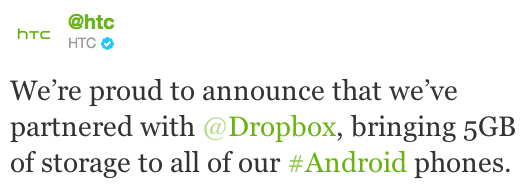
The bonus space is time-limited and only available to owners of a HTC phone with the new Sense 3.5 ROM. This is very different to HTC’s announcement: “We’re proud to announce that we’ve partnered with @Dropbox, bringing 5GB of storage to all of our #Android phones.

The Advertising Standards Authority now regulates advertising across all media -including marketing on websites. I wonder if this includes marketing statements made on Twitter from an official company account?

I feel a complaint to the ASA coming on!

All Your MMS Are Belong To China

A warning about the GO SMS Pro messaging app in Android Market.

I have discovered that when used in a particular way the app uploads your private MMS image attachments to a public web server in China (gosms.en.3g.cn)

For example, here’s one I sent earlier –

http://gosms.en.3g.cn/D?f=NPQRRMAE200dI_ViaGoSMS

It doesn’t tell you that it’s doing this and the client settings aren’t obvious. Worst of all there is no way to delete images once they have been posted.

Try it for yourself:

  • Open GO SMS Pro and start composing a new message
  • Add some text and then tap on the paperclip icon to add an attachment
  • In the GO tab, tap Pictures and select an image to attach, then tap Send

You’ll see that instead of a true MMS with an embedded image attachment being sent, your image has been uploaded to a Chinese web server and your message now contains a link to it.

If you are using this app in place of your stock messaging client and want to be sure that your images are sent only to the intended recipient, then I strongly urge you to uninstall immediately.